Taming the Drop Zone: A Small Kit to Keep the Entry Table Tidy
Problem
Question: Why does the table by the door always look like a small disaster by 4 p.m.?
The moment we step inside, pockets, bags, and small papers converge on the nearest flat surface. Left unchecked, the entry table becomes a catchall that adds friction to leaving home and takes several frustrating minutes to reset. The problem isn’t lack of effort; it’s lack of a clear, low-effort system tailored for the handful of items that actually need a place.
Process (a short studio note)
Over three weeks, I treated the entry table like a small design problem: observe what lands there, pick one tray plus two compartments, and test where each item left the next day. The rule was simple: if something didn’t return to its intended home on day two, it got reassigned. The iteration cycle—observe, assign, review—kept changes small and realistic.
Review
The experiment showed that a deliberate, compact kit reduced visual clutter and daily friction. The kit doesn’t force a minimal aesthetic; it expresses limits through containers and a short routine. The goal was steadiness, not perfection.
Principles
- Limit decision points. Keep the kit to three primary places: a surface tray, a small bin or bowl for loose items, and a holder for outgoing mail or documents.
- Make the next action obvious. If something needs to be returned to the car, the kit should include a spot labeled or obvious for car-related items. If a bill needs action, it should be in a visible “to-do” slot.
- Contain, don’t hide. The kit should curate what remains visible; don’t shove everything into a drawer out of sight and out of mind.
- Use durable, attractive containers. A simple wooden tray, ceramic bowl, or canvas pouch signals permanence and encourages consistent use.
- One-minute end-of-day reset. The system should require no more than a minute to clear each night (put keys in dish, hang bag, drop mail in folder).
- Design for the long tail. Expect occasional overflow; have a small, labeled basket for items that need deeper attention later in the week.
Examples
Below are three working kits that follow the principles but fit different households and habits.
1. The Minimalist Solo Kit
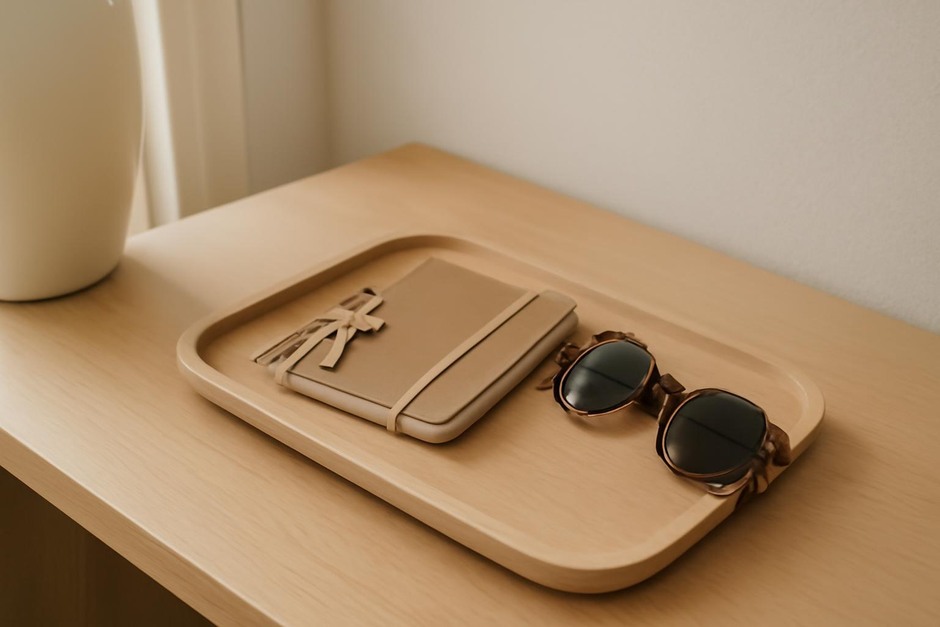
- Surface: Small rectangular wooden tray (30 x 15 cm).
- Compartments: Ceramic dish for keys and coins; slim leather pouch for sunglasses and earbuds.
- Action slot: Wall hook for the bag and a slim letter-holder for urgent mail.
- Why it works: Fewer containers reduce decision fatigue. Each item has an obvious home.
2. The Parent Kit
- Surface: Wide tray that can hold two smaller baskets.
- Compartments: One labeled basket for each child (snack money, permission slips), a communal bowl for keys, and a clip-on pouch for reusable masks or passes.
- Action slot: Wall-mounted pocket for outgoing permission slips and a small basket for lost-and-found kid items to be checked weekly.
- Why it works: Visible organization distributes responsibility and prevents last-minute scrambles.
3. The Renter/Small-Apartment Kit
- Surface: Narrow shelf or ledge with a tray that doubles as a catch-all.
- Compartments: Magnetic strip for keys, a hanging pocket for mail, and a slim notebook for short shopping lists.
- Action slot: A hook by the door for the bag and a calendar magnet for any one-off reminders.
- Why it works: Uses vertical space and keeps the footprint tiny while keeping actions visible.
Practice Checklist
- Observe for three days: note every item that lands on the entry surface.
- Choose one tray + two compartments that fit your style and space.
- Assign each common item a single home; label if helpful.
- Try a one-minute nightly reset: keys in dish, mail in slot, bag hung up.
- Review after one week: move anything that didn’t return to its spot and adjust the containers.
- Set a weekly five-minute check to empty the overflow basket and file or discard accumulated papers.
Small design choices at the threshold of your home ripple through daily routines. A compact, well-chosen kit turns the entry table from an accidental junk drawer into a reliable staging area—no drama, less friction, more ordinary calm.